How Does a Settlement Holiday Affect My Funds and Securities?
A settlement holiday occurs when the stock exchanges are open for trading, but the depositories/Banks may not carry out the normal settlements. On such days, you can buy and sell securities as usual. However, since the depositories are not operational, the settlement of funds and securities is postponed until the next settlement day.
What's the difference between a trading holiday and a settlement holiday?
Trading Holiday: You cannot buy or sell securities because the stock exchanges are closed.
- Settlement Holiday: You can continue trading, but the settlement of funds and securities will not take place until the next settlement day.
What Happens to Shares Purchased Before a Settlement Holiday?
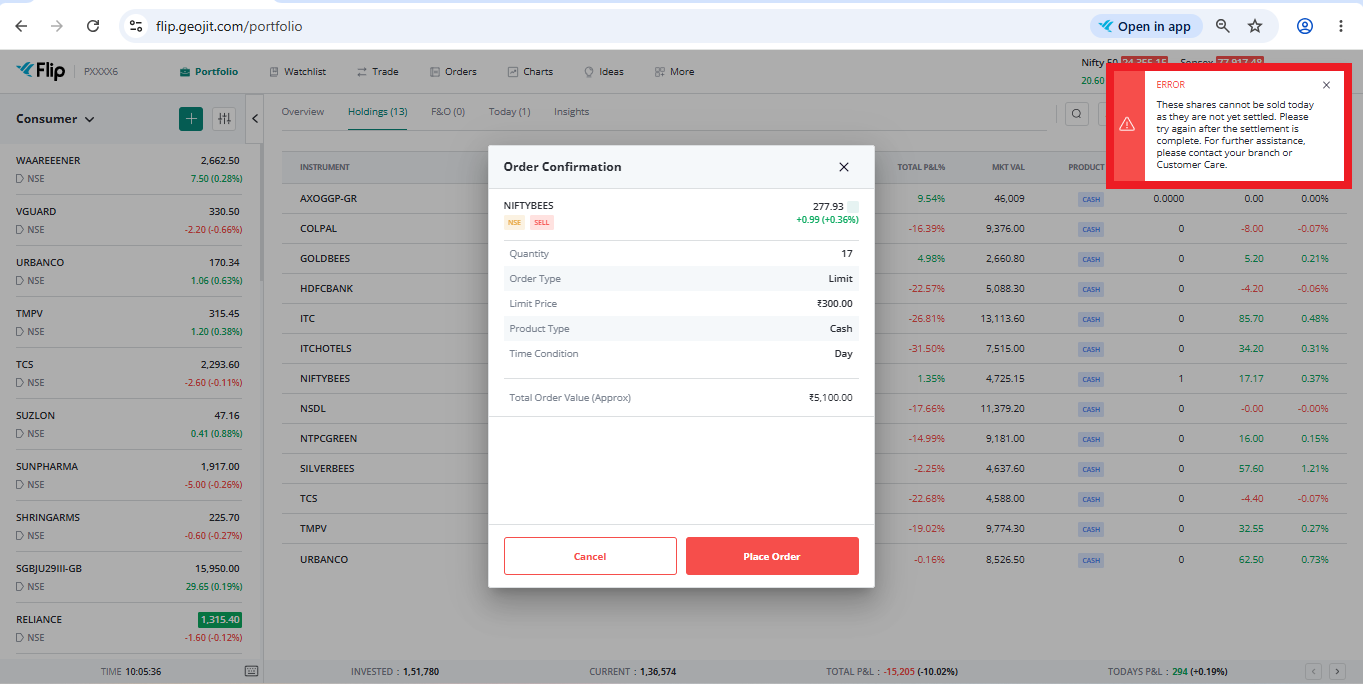
If you buy shares on the trading day before a settlement holiday, the shares will remain blocked until settlement is completed.
For example:
- You buy shares on 25 August 2026.
- 26 August 2026 is a settlement holiday.
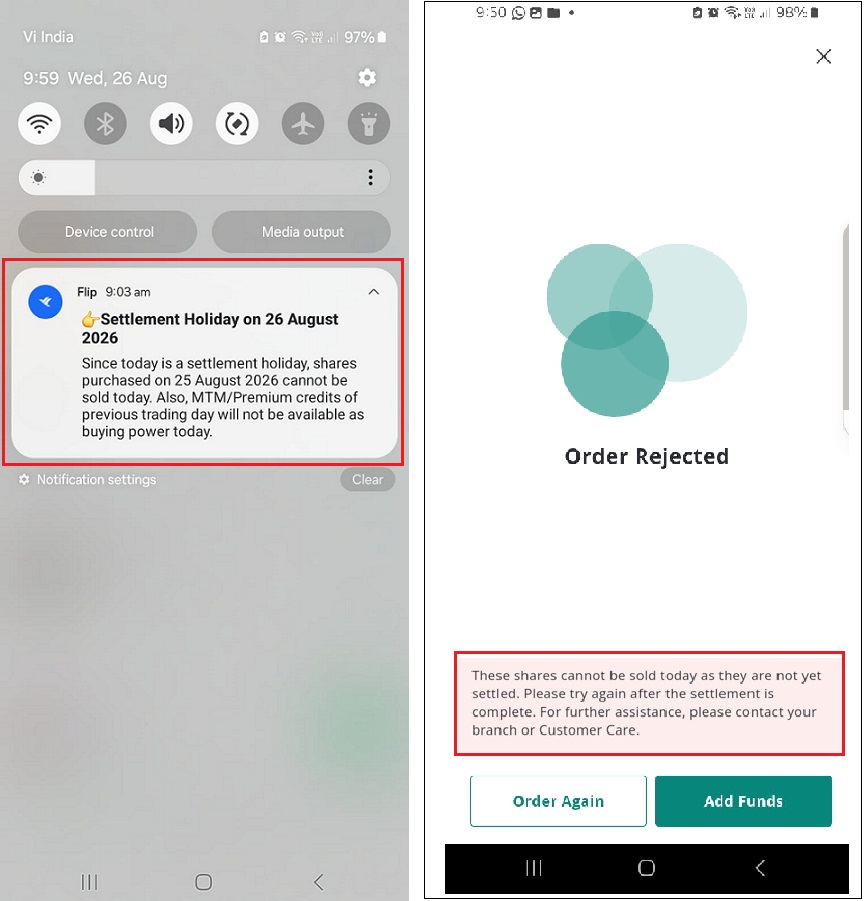
- Since settlement does not occur on 26 August, the shares cannot be sold on that day.
- The shares become eligible for sale on 27 August 2026, the next settlement day.
How Does a Settlement Holiday Affect Buying Power?
On a settlement holiday, settlement-based credits from the previous trading day may not be available as buying power.
This includes:
- Mark-to-Market (MTM) credits
- Option premium credits
- Other settlement-related credits
These credits will be available only after the settlement is completed on the next settlement day.
How Can I Check Settlement Holidays?
Geojit publishes both trading holidays and settlement holidays on its Notifications page. You may also see a pop-up notification in the app on the respective holiday to keep you informed about any trading or settlement impacts.
Still need help? Create Ticket


